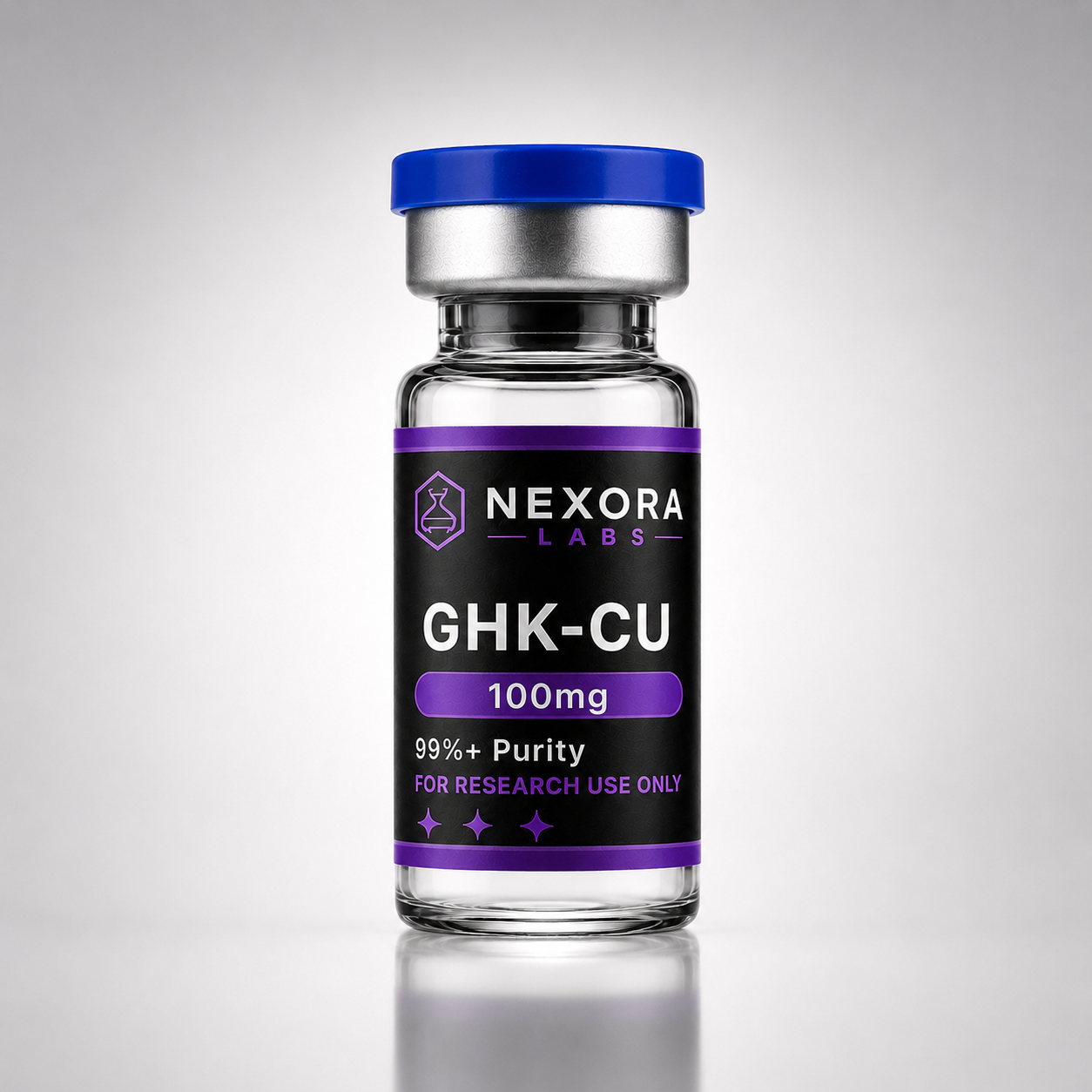
GHK-Cu
GHK-Cu is a copper-binding tripeptide studied for its role in extracellular matrix remodeling, antioxidant signalling, and modulation of genes associated with dermal regeneration and wound repair in research models..
- Vial Size
- 100mg
- Molecular Weight
- 402.93 g/mol (Cu complex)
- Half-life
- ~10 minutes (free); extended in tissue compartments
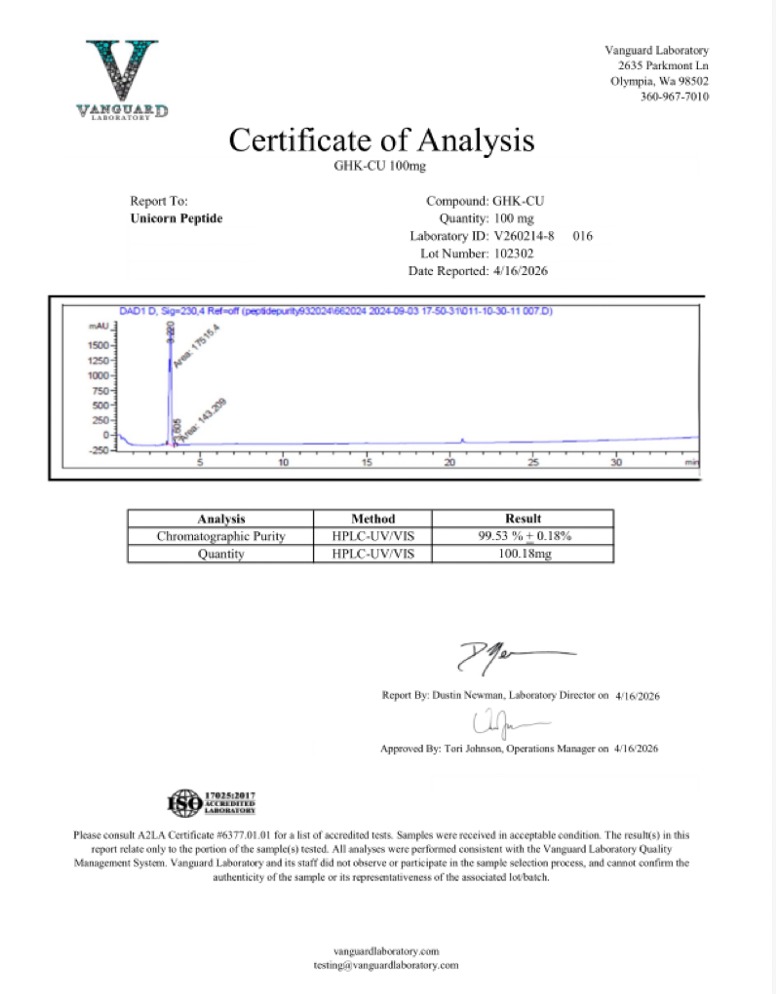
- Latest Lot Purity
- 99.53%
Mechanism of Action
GHK-Cu is a copper-binding tripeptide studied for its role in extracellular matrix remodeling, antioxidant signalling, and modulation of genes associated with dermal regeneration and wound repair in research models.
Research Context
- Dermal regeneration research
- Extracellular matrix remodeling
- Hair follicle signalling studies
- Antioxidant and copper-mediated pathways
Gly-His-Lys · Cu²⁺
Lot NX-028 · Verified at 99.53%
Plasma Profile & Protocol
Modelled plasma concentration over time, reconstitution calculator, and a literature-derived research protocol for GHK-Cu.
Illustrative Bateman model derived from published half-life and absorption data. For research-context visualisation only.
Solve for syringe units assuming a U-100 insulin syringe. Defaults seeded from the GHK-Cu monograph.
U-100 insulin syringe assumed (100 units = 1 mL). For research dosing visualisation only. Verify all dilutions independently.
- Typical Dose
- 1–2 mg
- Frequency
- Once daily
- Cycle Length
- 4–8 weeks
- Route
- Subcutaneous or topical
Note ·Free peptide clears fast; tissue compartment effects persist.
Related Compounds
All compounds →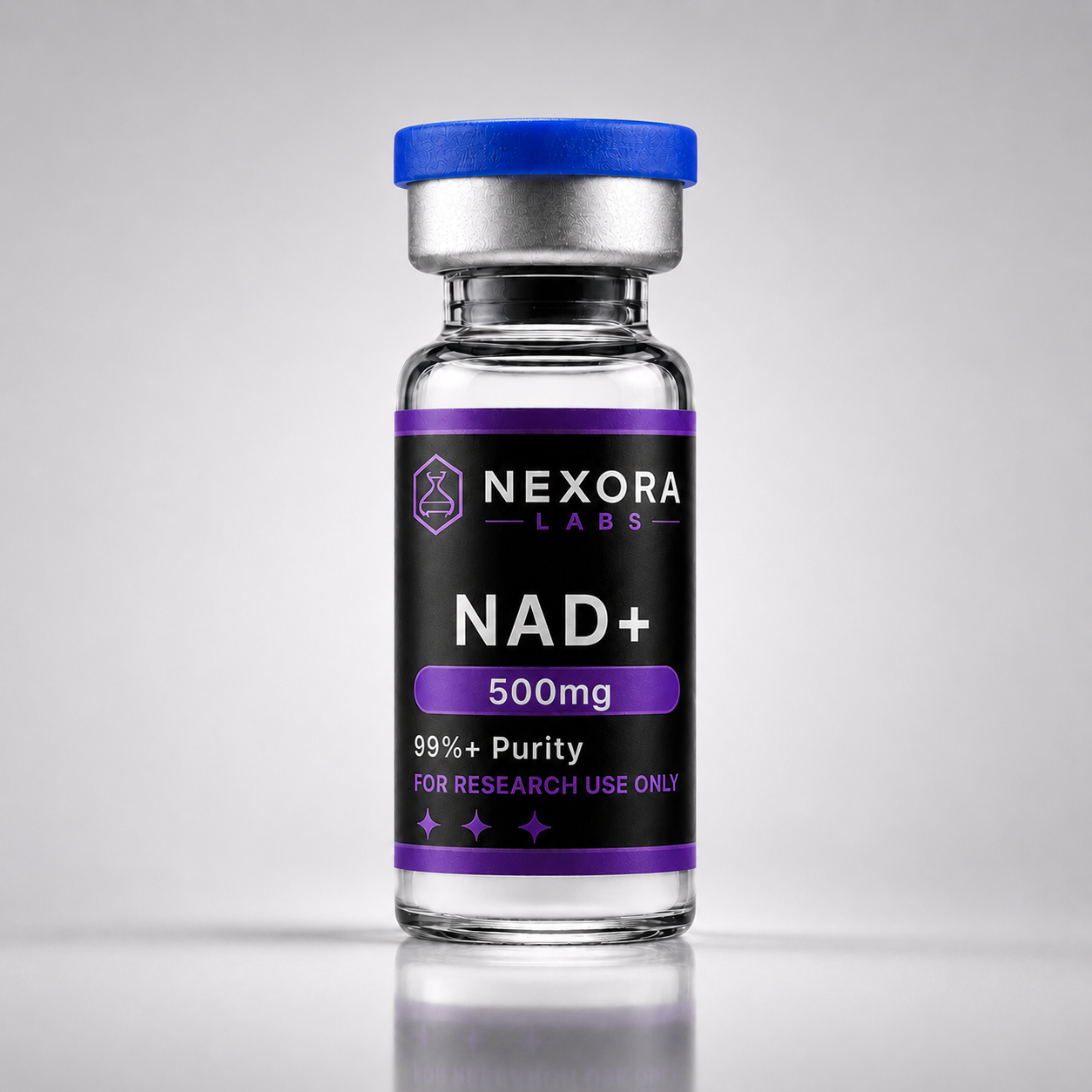
NAD+
Mitochondrial coenzyme for longevity, energy, and recovery research.
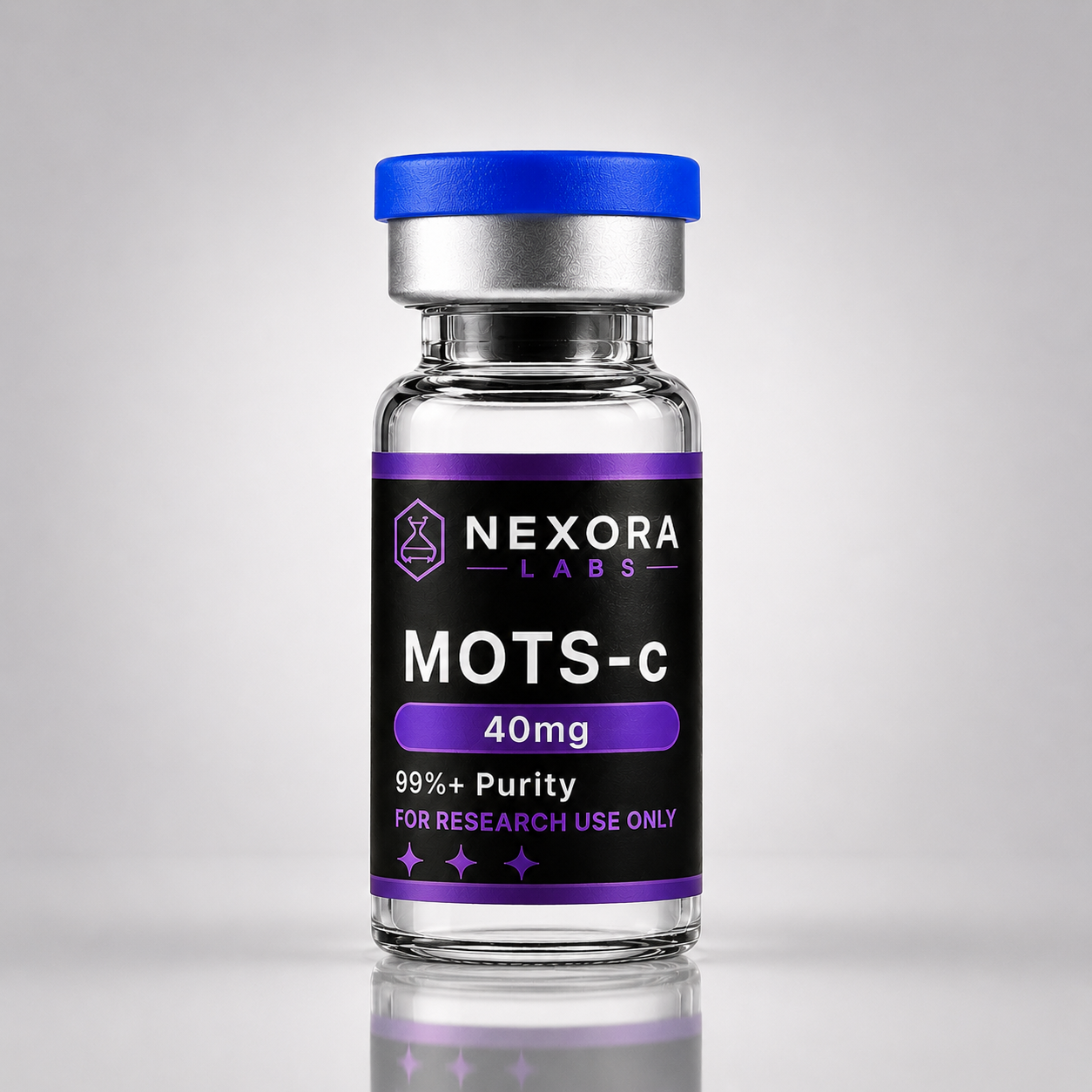
MOTS-C
Mitochondrial-derived peptide supporting metabolic resilience research.
For Research Use Only · This monograph summarises publicly available research literature for educational, in-vitro and laboratory research purposes only. Nexora Labs products are not drugs, food, supplements, or cosmetics, and are not intended to diagnose, treat, cure or prevent any condition.